UI design for a mobile game
Since this project is still in development, I can’t go into specifics yet due to confidentiality. However, I can give an example of the kinds of tasks I worked on and how I approached them. The images in this project are not the real process material, but instead “dummy” imagery I have created to help represent the tasks I solved.
As the UI designer I had the following responsibilities:
- Building quick UI mockups and prototypes for testing
- Collaborating with colleagues on conducting user tests
- Design user flow and interfaces
- Designing the visual language and UI assets
- Implementing UI into Unity
Onboarding for a mobile game
For new players, this game came with a long list of rules that they needed to understand in order to play. One of my key tasks was therefore to find a way to onboard new players in an intuitive way that made the rules easy to understand and remember.
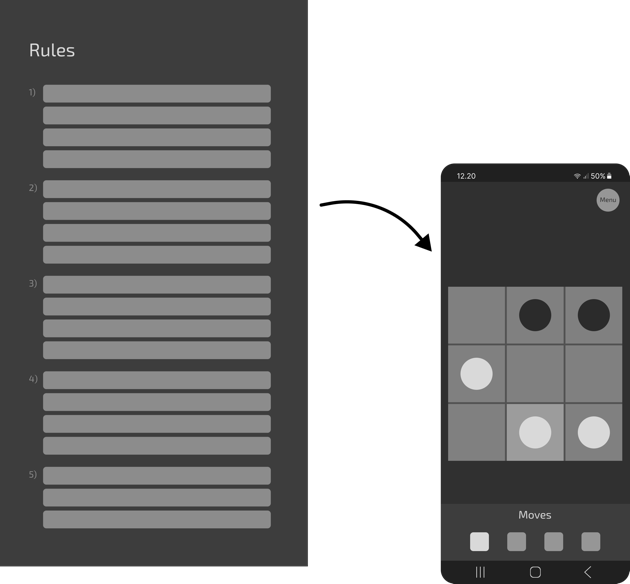

The user flow of a new player opening the game for the first time.
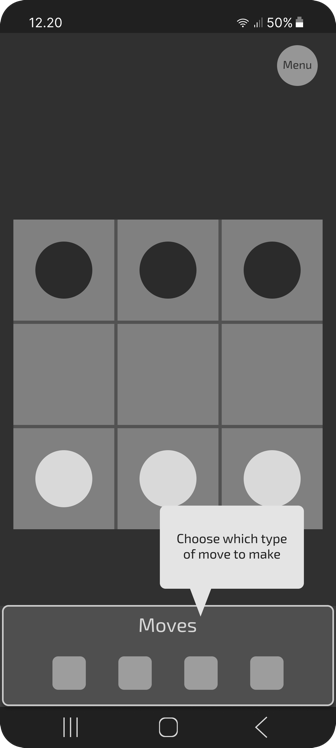
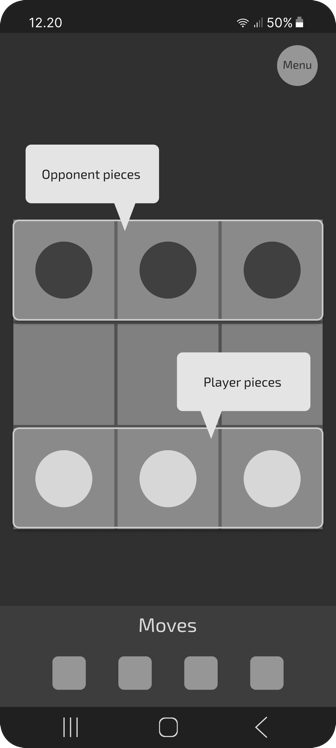
In terms of user flow we have a fairly simple onboarding process overall, with the tutorial being the biggest challenge. I started by separating the many rules into smaller groups, so that I could use the UI on still-images of gameplay to present them.
While this solution seemed to present the information in a way that was easy to understand, it became apparent during testing that it was hurting player engagement. Due to the amount of images needed to summarise everything, players would forget rules, get bored or skip the tutorial, which would then lead to frustration when they started playing and got confused by the game.
The solution
Since the issue appeared to be with the amount of information and not how the individual images presented it, my focus was to alleviate the player’s boredom with the tutorial. To do this, I took a step back and changed the structure of the user flow with a new format: instead of passively watching, the player would now interact with the tutorial through a tutorial level.

This method was by far the most effective during user testing, as the majority of players were fine with the tutorial taking some time as long as it was entertaining. By getting short instructions followed by player action, they were able to see the immediate consequences of their actions and gain a stronger, more tactile memory of the gameplay, creating a smooth transition into their first real level.